
From QS to Commercial Head: The Complete Career Roadmap
Are you feeling like your career as a Quantity Surveyor has plateaued? Do you see the path forward to senior commercial roles, but the steps feel unclear? Many professionals excel at measurement and cost tracking, only to find themselves stuck, unsure how to transition into strategic decision-making and leadership. This article lays out a clear, stage-by-stage roadmap from foundational QS work to leading commercial operations at a company level, grounded in the tangible skills and outputs that define success at each step.
1. QS — Build the Technical Foundation
The first 0-4 years of your career are about mastering the fundamental technical skills that underpin all commercial success in construction. This is where you build your credibility and your practical understanding of project costs and contracts.

You should master:
- Quantity take-off and measurement
- BOQ preparation
- Rate analysis
- Tendering and subcontractor comparison
- Interim valuations
- Payment certificates
- Variations
- Material reconciliation
- Basic contract administration
- Drawings and specifications interpretation
- Excel proficiency
Habits to develop:
- Keep a variation register. This isn't just a list; it's your first line of defense against scope creep and unapproved works. A well-maintained register, updated weekly, can identify a potential $50,000 unapproved change order before it's mistakenly absorbed into the project margin.
- Keep a payment tracker. This ensures you're not missing payment milestones and that applications align with progress. A discrepancy here could delay cash flow by weeks.
- Maintain a procurement/commitment tracker. Understanding what has been ordered or contracted is crucial for forecasting.
- Record everything commercially important in writing.
- Compare budget vs. actual vs. committed costs regularly.
Example: The Power of a Variation Register
A junior QS diligently tracks variations. A client requests additional lighting points in a specific area. Without a formal variation order, the QS logs it in their register with an estimated cost of $3,000. Three months later, during final account discussions, this $3,000 item is still not formalized. By having it clearly documented as 'awaiting client instruction/variation order', the QS prevents it from being treated as part of the original scope and ensures it will be recovered.
2. Senior QS — Become Commercially Independent
This is where you move beyond pure measurement. Your focus shifts to proactively managing commercial aspects, understanding the implications of contracts, and driving project profitability. This stage typically spans 3-7 years of experience.
You need to stop thinking *only* like a measurement QS and start thinking commercially.

Contracts Mastery:
- FIDIC & Subcontract Conditions: Understand the nuances of common contract forms.
- Notices: Timely and correct contractual notices are paramount. A delay in issuing a notice for latent conditions under FIDIC could forfeit your entitlement to an Extension of Time (EOT) and associated costs.
- Variations: Managing the commercial process, not just the measurement.
- Claims: Developing and submitting robust claims for extensions of time and loss of profit.
- Extension of Time (EOT) & Delay Analysis: Understanding methodologies like the Critical Path Method.
- Liquidated Damages: Knowing how they are calculated and how to defend against them.
- Payment Provisions: Ensuring cash flow is managed according to contract.
- Retention, Bonds and Guarantees: Managing these financial instruments.
- Contract Interpretation: Reading between the lines and understanding legal intent.
Commercial Management:
- Cost-to-complete: Accurately forecasting the remaining cost to finish the project.
- Forecast final account: Projecting the final contract value and cost.
- Cash flow management: Ensuring project liquidity.
- Procurement savings: Negotiating better rates with subcontractors and suppliers. A Senior QS who negotiates a 4% saving on a $2M subcontract package delivers $80,000 direct bottom-line impact.
- Subcontractor negotiations: Building relationships while securing favourable terms.
- Value engineering: Identifying cost-saving alternatives without compromising quality.
- Risk and opportunity management: Proactively identifying and mitigating potential issues.
- Change management: Controlling the process of project changes.
Leadership:
- Train junior QSs and review their work.
- Coordinate closely with construction and project management teams.
- Lead commercial meetings.
- Deal directly with consultants and subcontractors on commercial matters.
Scenario: A Timely EOT Claim
On a major infrastructure project, unprecedented ground conditions caused a 6-week delay. The Senior QS, leveraging their understanding of the contract and delay analysis techniques, issued a formal notice within 7 days and submitted a detailed EOT claim supported by programme analysis and site records. This protected the company from $500,000 in liquidated damages and secured an additional $250,000 in direct costs and overheads due to the delay.
At this level, you should be able to take responsibility for the commercial management of a complete project or significant package, rather than simply performing measurements.
3. Commercial Manager — Think Like the Business
With 6-10+ years of experience, your role transforms from project-specific management to understanding and influencing business outcomes. It's less about the mechanics of calculation and more about strategic commercial decision-making.
This level requires a deep understanding of project profitability. You need to know and manage the components that drive it:
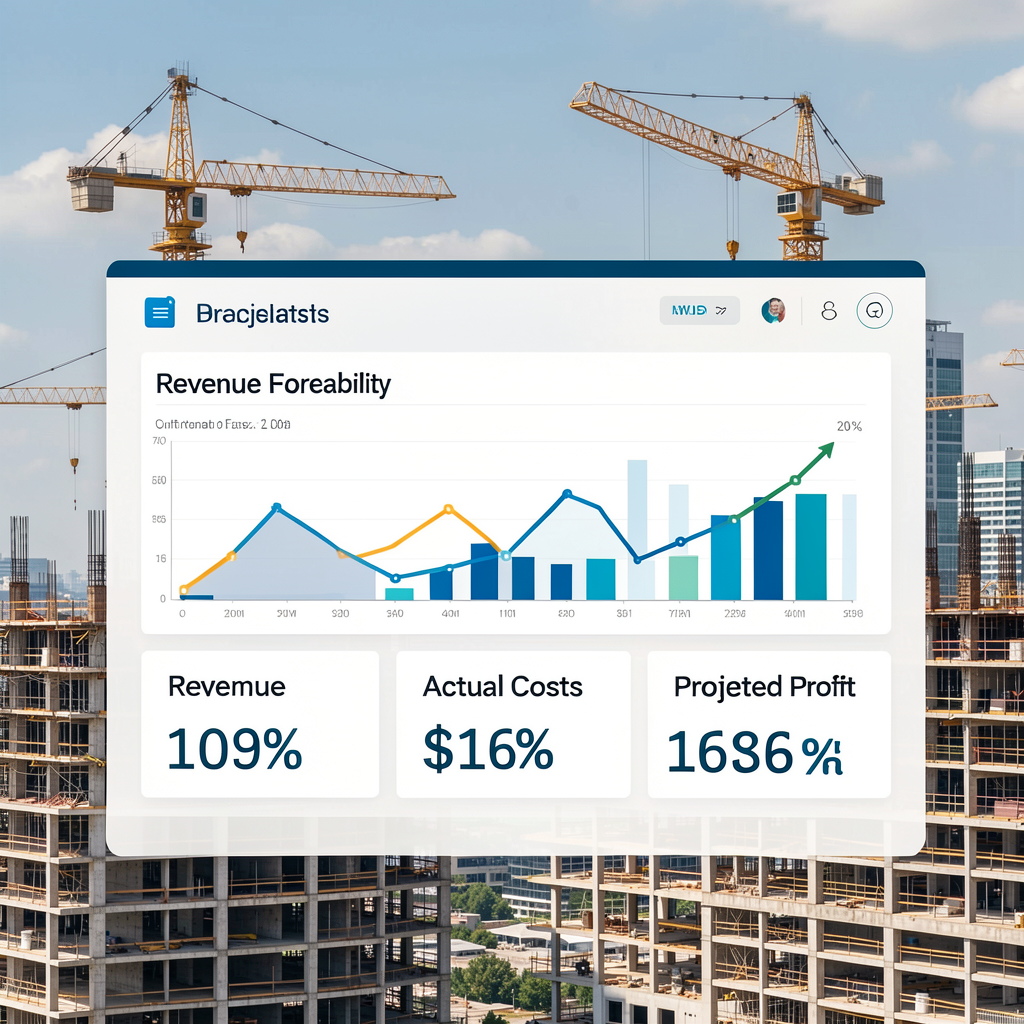
Project Profitability Formula:
Contract Value
Approved Variations
Revenue Forecast
MINUS
(Actual Cost + Committed Cost + Cost to Complete)
Expected Profit
Simplified Numeric Example:
Initial Contract Value: $10,000,000
Approved Variations: +$1,000,000
Revenue Forecast: $11,000,000
---
Actual Cost (to date): $4,000,000
Committed Cost (POs issued): $3,000,000
Cost to Complete (Forecast): $3,500,000
Total Cost: $10,500,000
---
Expected Profit: $11,000,000 - $10,500,000 = $500,000
A Commercial Manager's job is to influence each of these numbers to maximize the Expected Profit.
You need to lead commercial strategy, manage project profitability, and often oversee a team of QSs.
4. Cost Control — Become Excellent with Numbers
This role, often held concurrently with or as a specialization from Commercial Manager, focuses intensely on the accuracy and interpretation of cost data. It hinges on understanding the critical distinction between different cost categories.
Budget ≠ Commitment ≠ Actual Cost ≠ Forecast Cost. A good Cost Control professional doesn't just report these numbers; they explain *why* they are changing.
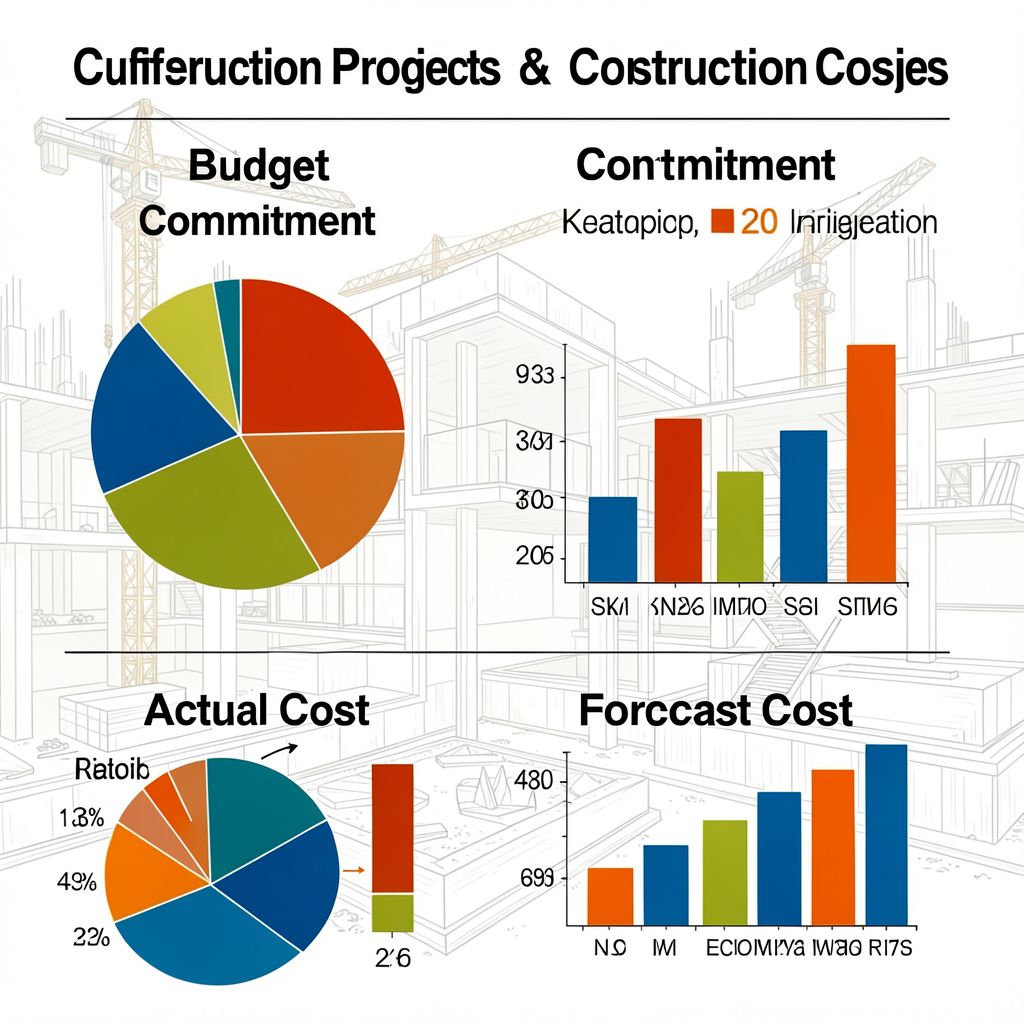
Illustrating Cost Categories:
Project: $5M Building Works
- Initial Budget: $5,000,000
- Approved Variations: +$200,000
- Revised Budget: $5,200,000
- ---
- Committed Costs (POs issued for materials & subcontracts): $4,000,000
- Actual Costs (Invoices paid): $3,000,000
- Forecast Cost to Complete (Remaining work): $2,000,000
- Total Forecast Cost: $3M (Actual) + $2M (Estimate) = $5,000,000
- Expected Profit/Loss: $5,200,000 (Revenue) - $5,000,000 (Forecast Cost) = +$200,000
The key is explaining *why* $3M has been spent and $2M is forecast, against $4M committed. Is the $1M difference due to slow material delivery, a subcontractor issue, or scope change not yet committed? This requires more than reporting figures; it demands analysis.
Responsibilities include:
- Budget preparation and control
- Regular cost reporting (variance analysis)
- Commitment tracking against budget
- Forecasting cost to complete (CTC)
- Cash flow forecasting
- Understanding and applying Earned Value Management (EVM) concepts
- Variance analysis and explaining deviations
- Managing risk allowances
- Change control process oversight
- Developing and maintaining management dashboards
Your ultimate goal is to provide clear, actionable insights that enable informed business decisions, not just data dumps.
5. Commercial Head — Think at Company Level
This is the pinnacle of the commercial career path, typically involving 10+ years of experience. A Commercial Head doesn't just manage one project; they often oversee multiple projects, teams, and contribute to the strategic direction of the entire company's commercial operations.
Depending on the company structure, your remit might include:

- Overseeing a portfolio of multiple projects
- Managing Commercial Managers, Senior QSs, and QSs
- Leading contract and claims teams
- Coordinating company-wide procurement strategy
- High-level client negotiations and relationship management
- Developing and implementing subcontract strategy
- Managing group cash flow and company profitability targets
- Overseeing commercial risk across the business
Example: Portfolio Risk Balancing
A Commercial Head manages three large projects. Project A is slightly over budget but ahead of schedule. Project B is on budget but facing significant potential delays due to a major subcontractor dispute. Project C is a fixed-price contract with a tight margin, highly sensitive to any cost overrun. The Commercial Head analyzes the collective risk: they might decide to allocate additional resources to expedite Project C's critical path, using spare capacity from Project A's advance, while simultaneously authorizing the legal team to engage with the subcontractor on Project B to resolve the dispute proactively, potentially accepting a small, controlled cost increase to avoid catastrophic delay penalties.
This involves looking at the bigger financial picture, balancing risk and reward across the company's entire project portfolio, and ensuring sustainable profitability and growth.
We use cookies and similar technologies to improve your browsing experience and personalize content. By continuing to use our site, you agree to our use of cookies.